1. Intake
Drop a source here
Repository, documents or source pack
Start with the evidence.
A readable source collection becomes the material Nebula can inspect.
Clarimind Nebula
Give Nebula a source pack or repository. It prepares a grounded starting model, shows its estimate before analysis, and gives you an editable Canvas and Atlas rather than a sealed report.
forming the spatial structure
Components, concepts, handoffs and relationships are being prepared into an editable model.
Reading the source collection.
Reviewing components and responsibilities.
Identifying decisions, evidence and open questions.
Connecting handoffs and dependencies.
Preparing the editable starting structure.
See Nebula at work
This is the same visual language used while Nebula examines a confirmed source collection, before the result opens as an editable model.
Three deliberate stages
1. Intake
Drop a source here
Repository, documents or source pack
A readable source collection becomes the material Nebula can inspect.
2. Choose
Nebula recommends a setup for you to confirm before the deeper work starts.
3. Estimate
Review the intended depth and credit range before committing.
The final charge uses measured provider tokens.Open the Canvas and Atlas, inspect relationships, then correct and extend the model.
An editable outcome
Drag nodes or the background. Scroll or pinch to zoom.
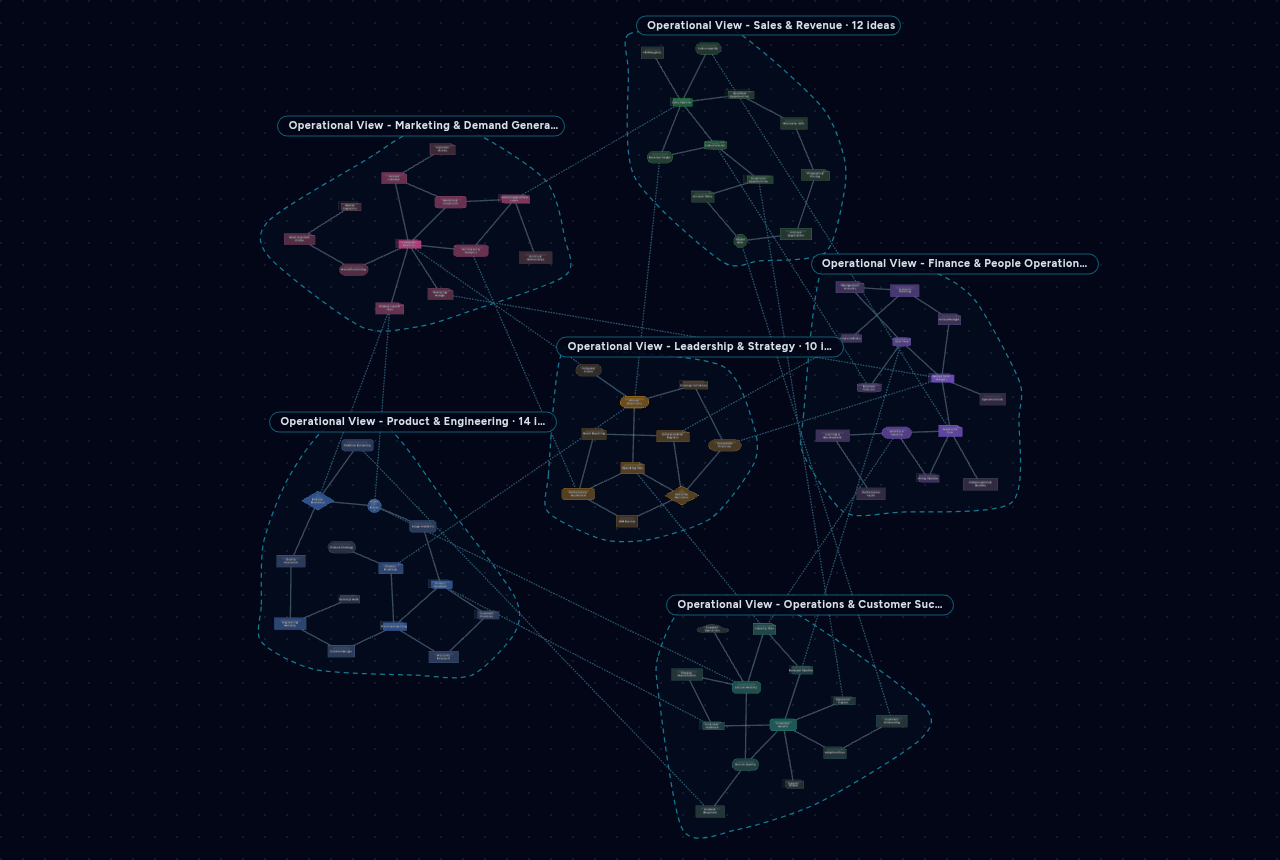
Use the result to navigate the concepts and components that matter without treating an early interpretation as final.
Use process extraction, concept modelling, repository scanning, or let Nebula recommend a route for you to confirm.
See the intended depth and credit range before you commit to the work.
Rename, move, disconnect and add to the generated model until it represents the work accurately.